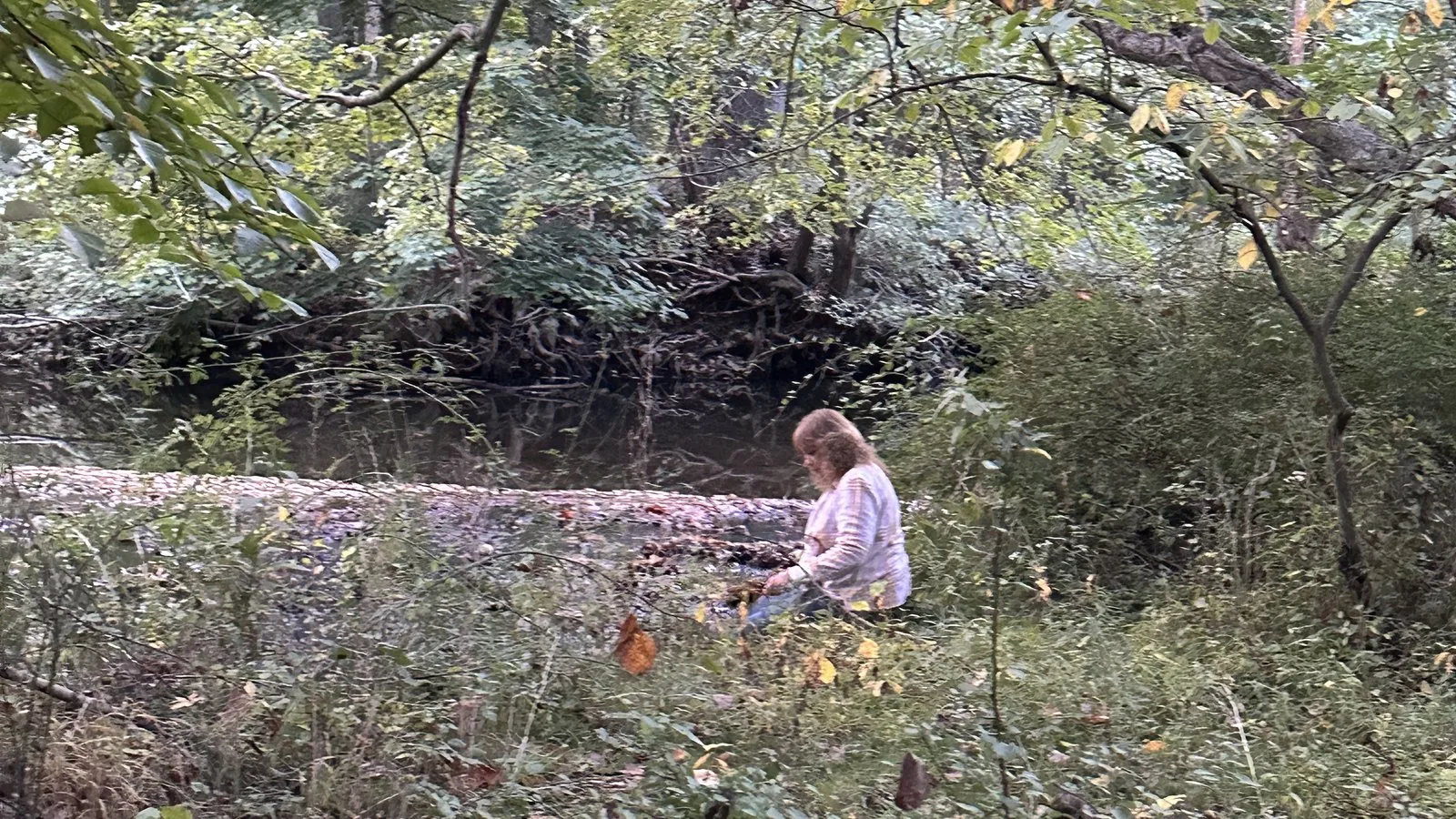
The term translates awkwardly. Shinrin-yoku, coined in Japan in the early 1980s as part of a national public health effort, arrives in English as forest bathing, which sounds either mystical or faintly ridiculous depending on your disposition. Both reactions are common and both get in the way of a practice that turns out to be unusually well suited to people who have tried and failed to meditate.
It is worth being precise about what the practice is and is not, because the vagueness surrounding the term does it no favors and leaves a reasonable person unsure whether they are being offered a clinical intervention, a wellness product, or a walk.
What it is not
It is not a hike. A hike has a destination, a distance, and a pace, and your attention is largely occupied by the trail, the map, and the time. Forest bathing has none of those. A two hour session might cover a quarter of a mile, and the distance is not the point in any sense.
It is not exercise. If your heart rate is elevated, you are doing something else. That something else may be excellent for you and it is not this, and conflating the two is how people end up concluding the practice did nothing.
It is not a guided meditation held outdoors. The direction of attention is the crucial difference. In most contemplative practice, attention turns inward toward the breath, the body, or a visualization. In forest bathing it turns outward toward what you can actually see, hear, and smell. For a considerable number of people this is precisely why it works when other approaches have not, because turning attention inward is unpleasant or frightening for reasons that have nothing to do with willingness.
It is also not a treatment for a clinical condition, and anyone suggesting a walk in the woods will resolve a depressive or anxiety disorder is overselling something that does not need to be oversold.
Where the practice came from
The origin story matters here because it explains why the evidence base looks the way it does. Shinrin-yoku was introduced by the Japanese Forestry Agency in 1982, and it was a public health initiative before it was anything else. Japan was dealing with a well-documented problem of overwork and stress-related illness in an intensely urban population, and it also had enormous quantities of accessible forest. The program was an attempt to connect the two.
Because it began as government policy rather than as a therapeutic modality, it was studied early and studied institutionally. By the mid 2000s there were designated forest therapy sites with physiological monitoring built into them. That is unusual. Most practices that arrive in the United States wrapped in wellness language have no comparable research history behind them, and it is worth knowing that this one does, even allowing for the limitations of that research.
What did not survive the translation is the ordinariness of it. In Japan this was framed as public infrastructure, closer to a park bench than to a treatment. In the United States it has largely arrived as a paid guided experience, which changes how people encounter it and raises the barrier to simply trying it.
What the practice involves
A session has a loose structure rather than a script. The elements below appear in most guided versions and can be reproduced without a guide.
- Walking slowly.You slow to a pace that feels almost absurd at first. Nearly everyone finds the first fifteen minutes uncomfortable, and that discomfort is not a sign you are doing it wrong. It is the ordinary experience of a nervous system that has not been asked to do this in a long time.
- Sensory attention, one channel at a time.Cycling deliberately through sight, then sound, then smell, then touch, one at a time, rather than taking in everything simultaneously. Isolating a single sense is what separates this from simply being outside.
- Stopping.Sitting in one place for an extended period, twenty minutes or more. This is where most of the effect appears to happen and it is the part people most often skip.
- No objective.The point of having no destination is that there is nothing to complete, which removes the mechanism your mind normally uses to hurry you along. This is harder than it sounds and it is the whole practice.
Guided sessions typically run two to three hours. That length is not arbitrary. Most of the measured physiological change in the research literature appears after the first hour, which is roughly the point at which people stop mentally managing the experience and simply have it.
What the research actually shows
The evidence base is real, and it is worth describing accurately rather than inflating, because the inflated version is what makes reasonable people dismiss the whole thing.
- Multiple Japanese and South Korean studies have found reductions in salivary cortisol, blood pressure, and heart rate variability measures after forest sessions compared with matched urban walks of the same duration. The urban comparison matters because it separates the effect of the environment from the effect of walking.
- Self-reported anxiety and rumination scores drop consistently across studies, often more reliably than the physiological markers do.
- Effects appear to be relatively short-lived without repetition, in the range of days rather than weeks. That argues for regularity over intensity, which is a more forgiving requirement than it sounds.
- Sample sizes across much of this literature are small, most of the work comes from a small number of research groups, and blinding a nature intervention is impossible. Appropriate caution applies.
What that adds up to is a low-cost, low-risk practice with a reasonable evidence base for stress and anxiety symptoms, and no evidence that it treats a diagnosable condition on its own. That is a perfectly respectable thing for a practice to be.
Where to do it in Bergen and Passaic County
You do not need wilderness. You need sufficient tree cover and enough quiet that road noise is not the dominant sound. Several places within a short drive of Saddle River qualify.
- Ramapo Valley County Reservation, Mahwah.Large, varied, and quiet enough on a weekday morning that you can find a section entirely to yourself. The best option in the county if you have the time to get there.
- Celery Farm Natural Area, Allendale.Small and flat, and unusually good for sound-focused sessions because of the volume of bird activity. Also the most accessible option for anyone with mobility limits.
- Saddle River County Park, Ridgewood through Rochelle Park.Dense enough in sections and close to almost everywhere in the county, which matters more than scenic quality if the alternative is not going.
- Ringwood State Park, Passaic County.Higher elevation, more solitude, and worth the twenty five minute drive if you want a longer session without encountering anyone.
Weekday mornings are meaningfully better than weekends for this, and the difference is larger than you would guess. October is also the most forgiving month of the year to start because the temperature still permits sitting still for an hour and the sensory environment is at its most varied. By January the sitting portion becomes genuinely difficult and the practice has to be adapted.
How to run your own session
If you would rather try this alone than book a guided session, a workable first attempt looks roughly like this:
- Set aside the time.Ninety minutes if you can manage it, sixty as a minimum. Anything under forty five is mostly the uncomfortable part.
- Leave the phone in the car.Not on airplane mode in your pocket. Actually away, because the awareness that it is available is enough to occupy the attention you are trying to free up.
- Alternate slow walking and stopping.Walk for ten minutes at half your normal pace, then stop and stay stopped for five, then repeat. The stopping is where the work happens.
- Take the senses one at a time.Spend five minutes on sound alone with your eyes closed. Then five on smell. Then five looking at one thing rather than scanning. Most people find one channel much easier than the others.
- Expect to feel silly.Restlessness, boredom, and a strong urge to check the time are all standard and they generally pass somewhere in the second half. Treating them as failure is the most common reason people stop after one attempt.
Who this tends to suit
In practice this works well for people who have tried seated meditation and found it intolerable, people who describe themselves as bad at relaxing, and people whose stress presents physically rather than emotionally. The outward direction of attention is simply easier for a lot of nervous systems than the inward direction, particularly ones that have learned somewhere along the line that turning attention inward leads somewhere unpleasant.
It is worth saying plainly that this sits alongside clinical work rather than replacing it. If what you are carrying is trauma, a body-based approach with a clinician, such asBrainspotting, is a fundamentally different kind of intervention, and time in the woods is not a substitute for it. What forest bathing does well is give a dysregulated nervous system a repeatable, unmedicated, no-cost route back toward settled. That is a real and underrated thing to have available, particularly in a season when the other routes are thinning out.
Frequently Asked Questions
Do I need a guide?
No, though a guided session is a reasonable way to learn the pacing, which is the part most people get wrong on their own by moving far too quickly. After two or three sessions most people can do it unaccompanied without losing anything.
How long before I feel anything?
Most people report that the first twenty minutes feel restless and slightly ridiculous, and that something shifts somewhere in the second hour. If you give it thirty minutes, you will mostly experience the restless part and conclude it does not work.
Does it work in winter?
Yes, though sitting still becomes the limiting factor. Below about forty degrees, shorter sessions with proportionally more walking and less stopping work better, and the sensory focus shifts naturally toward sound and touch.
Is this the same as ecotherapy?
Related but not identical. Ecotherapy is a broader category that includes therapeutic work conducted outdoors with a clinician present. Forest bathing is a specific sensory practice that does not require a therapist and is not itself therapy.
Can I do this with children or a partner?
You can, with the understanding that the practice depends on not talking. Agreeing in advance to walk separately and reconvene at a set time tends to work better than attempting a silent walk side by side, which most pairs abandon within ten minutes.

If Sitting Still Has Never Worked for You
A lot of people arrive here having concluded that they are simply not built for anything contemplative, usually on the evidence of a meditation app they downloaded and abandoned. That conclusion is almost always wrong. What is usually true is that inward-directed attention was the wrong starting point for them, and that nobody offered a second option.
The free 15 minute discovery call is a conversation, not an intake. Tell us what you have already tried and what happened when you tried it, and we will help you work out which approach is actually worth your time, including the possibility that what you need is not us.
Call(201) 708-8448orbook your free discovery call. We are at 96 East Allendale Road in Saddle River, roughly ten minutes from the Ramapo Valley Reservation.
This blog post is for informational purposes only and does not constitute professional mental health advice, diagnosis, or treatment.
Not sure if this is right for you? Take the 30-second match.