There is a particular tone people use when they say they are bad at meditation. It carries a small amount of guilt, as though they have failed a test that everyone else passed. Usually they downloaded an app, used it for nine days, spent most of that time thinking about work, and quietly stopped.
That sequence is so common it is closer to the norm than the exception. What almost nobody is told is that they were handed the most difficult version of the practice with no explanation that other versions exist.
Why the standard instruction is so hard
The default instruction is to sit still, close your eyes, and bring your attention to the breath. Every component of that is doing something demanding, and it is worth naming what.
- Stillness.Sitting still removes movement, which is one of the primary ways a body discharges activation. Asking an activated body to stop moving does not reduce the activation. It removes the outlet for it.
- Eyes closed.Closing your eyes removes visual anchoring. For a nervous system that is scanning for threat, whether that scanning is conscious or not, closing the eyes reliably increases vigilance rather than reducing it.
- Attention on the breath.The breath is a poor first anchor for a lot of people, because attending to it changes it. Many people find that watching their breathing makes it feel effortful or insufficient, which generates exactly the anxiety they were trying to reduce.
- Inward direction.Attention turned inward, without preparation, is unpleasant for people carrying material they have been keeping at a distance. This is not a character flaw. It is what the strategy was designed to do.
Stack those four and you have an instruction that is genuinely difficult for a large portion of people, handed out as though it were the easy introductory version. It is not. It is closer to an advanced practice, and it is presented as a starting point because it is the simplest to describe rather than the simplest to do.
What restlessness actually means
There is an important distinction that rarely gets made, and it changes what you should do next.
Ordinary restlessness is the experience of a mind that has been busy encountering the absence of stimulation. It shows up as boredom, fidgeting, mental list-making, and a strong urge to check the time. It generally settles within ten to fifteen minutes if you stay with it, and pushing through it is reasonable. This is the version most instruction is written for.
Escalating distress is different. It shows up as increasing rather than decreasing agitation, a rising heart rate, a sense of panic or dread, intrusive images, or a strong urge to leave. This does not settle by staying with it. It intensifies. If that is your experience, continuing is not discipline, it is repeatedly asking a nervous system to do something it is signalling clearly that it cannot currently do.
The second pattern is common in people with trauma histories and it is well documented. Meditation-related adverse effects are real, they are underreported, and a person experiencing them has usually been told to try harder. The appropriate response is a different practice, and often a different practice with a clinician present.
What the practice is actually for
A lot of the discouragement around this comes from an incorrect idea of the goal. People assume the aim is a calm, empty mind, and they measure each session against that. By this standard essentially every session is a failure, including sessions by people who have practiced for decades.
The more accurate description is that you are training one specific ability: noticing where your attention has gone, and choosing to move it. That is the whole skill. It has nothing to do with feeling peaceful and it can be practiced perfectly well while feeling irritated, bored, or restless.
This matters practically because it changes what counts as progress. The benefit does not show up as calm during practice. It shows up later, as a slightly wider gap between something happening and your reaction to it. Someone cuts you off on Route 17 and there is a fractional pause where previously there was none. That gap is the entire return on the investment, and it is easy to miss because it is the absence of something rather than the presence of it.
Other doors into the same room
The goal of contemplative practice is not sitting. Sitting is a delivery mechanism. Several others work, and for many people they work considerably better.
- Walking meditation.Not a stroll. A slow, deliberate pace with attention on the physical sensation of the feet meeting the ground. Movement provides the outlet stillness removes, and the sensation of contact is a far more concrete anchor than the breath.
- Sound-based practice.Attention on ambient sound, eyes open or closed. Sound arrives without effort and does not change when you attend to it, which removes the main problem with breath focus. This is also the mechanism underneath a sound bath.
- Body scan.Attention moving systematically through the body. More structured than open awareness, which helps people who need something to do, though it can be difficult for those who find bodily attention itself uncomfortable.
- Outward-directed attention.Attention directed outward at what you can see, hear, and smell. Easier for most nervous systems than inward attention, and the basis of practices like forest bathing.
- Task-based attention.Washing dishes, folding laundry, walking the dog. The task occupies the hands, the attention rests on sensation, and nothing about it announces itself as meditation, which for some people removes the entire obstacle.
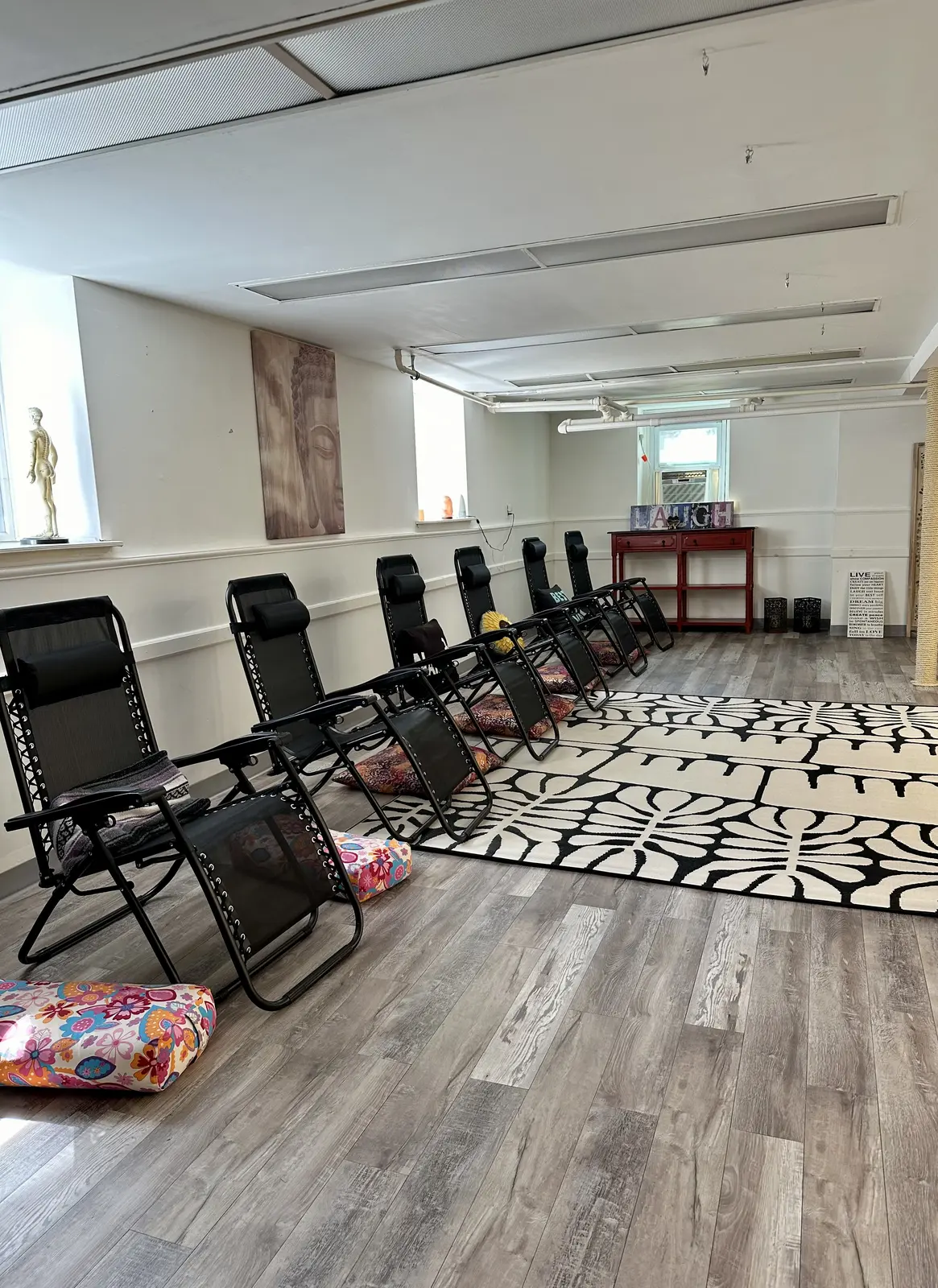
The sound-based route is worth particular mention because it removes almost every barrier at once. In asound bath, you are lying down rather than holding a posture, the sound gives attention somewhere to land without effort, and there is nothing to do correctly. People who have never managed five minutes of seated practice frequently manage an hour of this, which tells you the obstacle was never their attention span.
If you want to try again, do it differently
A more workable version of starting over looks like this.
- Start at two minutes.Not ten. Two minutes is short enough that the restlessness does not have time to become the whole experience, and short enough that you will actually do it tomorrow.
- Keep your eyes open.Visual anchoring makes this substantially easier for most people. A soft gaze at a fixed point on the floor is a legitimate instruction, not a compromise.
- Use a different anchor.Feet on the floor, hands on your legs, ambient sound. All of these are steadier anchors than the breath and none of them change when you observe them.
- Same time every day.Daily and brief beats weekly and long by a wide margin. This is the single most useful piece of advice in this article and it is almost never given.
- Expect to lose focus constantly.Attention wandering is not failure, it is the exercise. Noticing that it has wandered and returning is the entire repetition. A session with fifty returns is a productive session.
Six weeks at two minutes a day will tell you more than any number of ambitious attempts at twenty. Most people who establish a practice do it this way and then extend it, rather than starting where they imagine they should be.
When to do this with someone rather than alone
Most people can work this out on their own with better instructions. A few situations warrant company.
- If attempts at practice consistently produce escalating distress rather than settling restlessness.
- If you have a trauma history and inward attention brings material you are not equipped to handle alone.
- If dissociation is part of your experience, since some practices can deepen it rather than interrupting it.
- If you have tried several approaches with genuine consistency and none of them have produced anything, which sometimes indicates that regulation work needs to come before attention work.
None of these means meditation is closed to you. They mean the sequence matters, and that starting with a nervous system that has no reliable route to settling is starting in the wrong place.
Frequently Asked Questions
Is it still meditation if I am moving?
Yes. Walking practice is among the oldest forms in most contemplative traditions and predates the app-based version most people encounter first. The stillness is not the point; the quality of attention is.
How long before I notice anything?
Most people notice something within two to three weeks of daily short practice, usually as a slightly longer gap between a trigger and their reaction to it rather than as a feeling of calm. Waiting for calm is one of the more common reasons people conclude it is not working.
Do apps work?
They work for structure and for reminders, and they are poor at telling you when a practice is wrong for you. If an app is making you feel worse, the correct response is to stop rather than to complete the streak.
What if my mind never quiets down?
It will not, and it is not supposed to. The instruction to empty the mind is a mistranslation that has caused an enormous amount of unnecessary discouragement. The practice is noticing where attention has gone and bringing it back, repeatedly.
Can meditation replace therapy?
No, and the two do different jobs. Practice builds the capacity to notice and to stay present. Therapy addresses what you find when you do. People often need both, and in many cases the therapy needs to come first.

If You Have Decided You Are Bad at This
Almost everyone who says that has tried one thing, once, badly instructed. It is a bit like concluding you cannot exercise on the evidence of a single attempt at running a marathon, and it is unfortunate mostly because the people who most need a way to settle their nervous system are exactly the people the standard instruction fails.
The free 15 minute discovery call is a conversation, not an intake. Tell us what you tried and what happened when you tried it, particularly if what happened was that you felt worse, and we will help you work out which direction is worth your time.
Call(201) 708-8448orbook your free discovery call. We are at 96 East Allendale Road in Saddle River, and we see clients across Bergen County in person and throughout New Jersey by video.
This blog post is for informational purposes only and does not constitute professional mental health advice, diagnosis, or treatment.
Not sure if this is right for you? Take the 30-second match.